
Who We Are
Work in Culture (WIC) is a non-profit arts service organization that has been serving the cultural sector since 1998.
Our mission is to advance the careers of artists, creatives, and cultural workers from diverse lived experiences, and support the organizations that engage them, through entrepreneurial and business skills development and innovative research.
What We Do
We serve a dynamic and wide-ranging arts and culture sector that embraces many disciplines and industries.
This includes:
- the arts (visual arts and crafts, dance, music, theatre, literary arts)
- cultural industries (design and advertising, digital and interactive media, film and television, book and magazine publishing, music recording and publishing)
- museums and heritage
- libraries
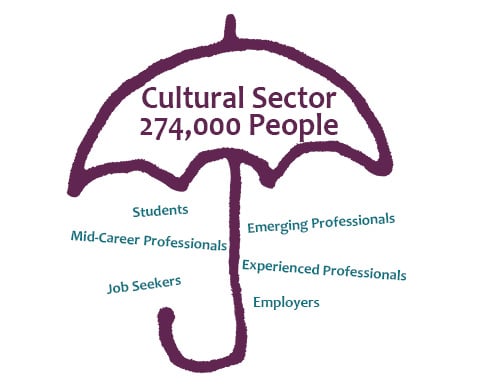
At the heart of the sector, there are artists and creators — people who, independently or collaboratively, practice any of the creative arts.
There are also people working in the sector as arts and culture professionals, who support the arts as part of arts and culture organizations, arts service organizations, and non- and for-profit cultural industries.
There are over 274,000 artists, creatives, and cultural workers working in the arts and culture sector in Ontario alone!
Work in Culture is here to support and encourage artists, creatives, and all cultural workers to strive for success, whatever that may mean to each individual.
We develop and deliver business, entrepreneurial, organizational, and career training for arts and culture workers, in person and online, across all arts disciplines, cultural industries, and career levels.
We believe we can help one another to prosper and grow through knowledge sharing, collaboration, and partnership. Explore our cultural career programs and resources.
We serve as a platform of opportunities.
With over 1,700 jobs posted every year, our popular arts and culture Job Board connects job seekers with employers across the country, and arts and culture workers with a range of professional development and volunteer opportunities. Find your next opportunity on the Work in Culture Job Board.
We explore sector conditions, trends, and priorities through innovative research.
Our research projects highlight the social and economic impact of the arts and culture community, and identify our sector’s business skills/training gaps and needs to inform future programming. Explore our cultural career research.
We also share success stories from the sector and best practices and resources for living, working and thriving in arts and culture.
For updates and news about Work in Culture and the cultural sector, please sign-up to our monthly enewsletter and join our social media communities from our Contact Us page.
Additionally, we work with sector leaders, organizations, and funders as a partner of choice for business skills training within the arts and culture sector.
Interested in joining the more than 100 organizations across Ontario who have delivered impactful learning opportunities to their communities with the help of Work in Culture? Visit our Partner With Us page for more information.
Our Staff
Diane Davy, Executive Director
Karen Ennis, General Manager
Stephanie Draker, Program Manager
Brianne DiAngelo, Marketing and Communications Manager
Naomi Stokes, Project Support Assistant
Our Board
Mike Rudolph (Chair)
Amanda Hancox (Past Chair)
Lee Robock (Treasurer)
Erin Finlay
Claire Gillis
Sacha Isaacksz
Sheliza Jamal
Estefania (Stef) Rigada
Zainub Verjee